


Car sharing software, integrated with telematics, is the digital engine that drives your sharing business's efficiency and scalability. It’s a technology stack that connects the car, the customer, and the operator to enable seamless rentals.
In this lesson, we will present the three essential software layers required for modern shared mobility and explore the critical strategic choice that determines your success: building a custom solution versus buying white-label software.
First Layer: Vehicle-Level (Keyless Access and Data)
The vehicle layer is the physical foundation of your service. It consists of the telematics unit and its embedded software that enables remote control and data collection. This hardware serves as the essential bridge between the vehicle's internal systems and your backend servers. This layer has two core responsibilities:
1. Keyless Access:
This is the most noticeable function. The telematics unit receives digital commands from your software stack (e.g., from the customer’s mobile app via Bluetooth) to instantly lock, unlock, or immobilize the vehicle. This remote control is what defines modern, automated shared mobility.
2. Vehicle Data Transmission:
The unit continuously monitors and transmits vital vehicle data, including real-time GPS location, fuel/battery level, mileage, door/window status, and maintenance data. This constant stream of data is what feeds the management backend, allowing operators to monitor asset health, optimize maintenance schedules, and ensure vehicles are ready for the next customer.
Without a robust, reliable, and secure vehicle-level system, no operational or user-facing software can function. This is why it is often the first and most critical component an operator must select and integrate.
Second Layer: User-Level (Mobile App)
The user-level software is the customer-facing interface. It’s usually a dedicated mobile application and the single most important tool for user experience and revenue generation. It manages the entire customer journey from registration to payment. Key functions of the user application include:
-
Registration and Verification:
Allowing users to sign up, upload their license and documents, and pass any necessary background or fraud checks seamlessly. -
Vehicle Discovery and Booking:
Presenting a real-time map view of available vehicles (fed by the vehicle-level GPS data), allowing users to filter, reserve a vehicle, and navigate to its location. -
Keyless Access Interface:
Providing the digital button that triggers the lock/unlock command to the telematics unit, initiating the rental -
In-Trip Communication:
Handling features like in-app damage reporting, viewing trip status, and extending reservations. -
Billing and Payment:
Allowing customers to add payment methods to their account for secure processing of payments at the end of the rental. Billing is usually handled by the operator’s backend with the app only acting as the interface. -
Customer Support Integration:
Offering easy access to help, FAQs, or direct contact with the operator. -
Marketing:
Letting you display promotions to the customer and send notifications to advertise the service.
The design, reliability, and speed of this application are essential for customer retention. A smooth, intuitive user application is a primary differentiator in a competitive shared mobility market.
Third Layer: Operator-Level (Management Backend)
The management backend, often called the fleet management platform (or admin dashboard), is the central nervous system of your operation. This is the web application used exclusively by your team to monitor, control, and optimize every aspect of the business. It consumes all the raw data from the vehicle layer and integrates it with the user data from the mobile application.
The management backend handles four critical areas of operation. First, it provides real-time fleet oversight and control, allowing operators to intervene remotely and check vehicle diagnostics. Second, it manages user and pricing management, covering everything from approving new registrations to configuring dynamic rates and geofencing rules. Third, it simplifies operational task management, such as automating maintenance schedules, cleaning assignments, and vehicle relocations. Finally, it provides analytics and reporting, turning raw usage data into actionable business intelligence like utilization rates and driver behavior profiles. A robust backend is essential because it directly dictates your team's efficiency and capacity to scale the business without excessive manual effort.
Build vs. Buy
Once you understand the required software stack, the most significant strategic choice you face is how to acquire it: Build your own developed solution or buy white-label/partner software? This decision hinges entirely on your available resources and your operational goal:
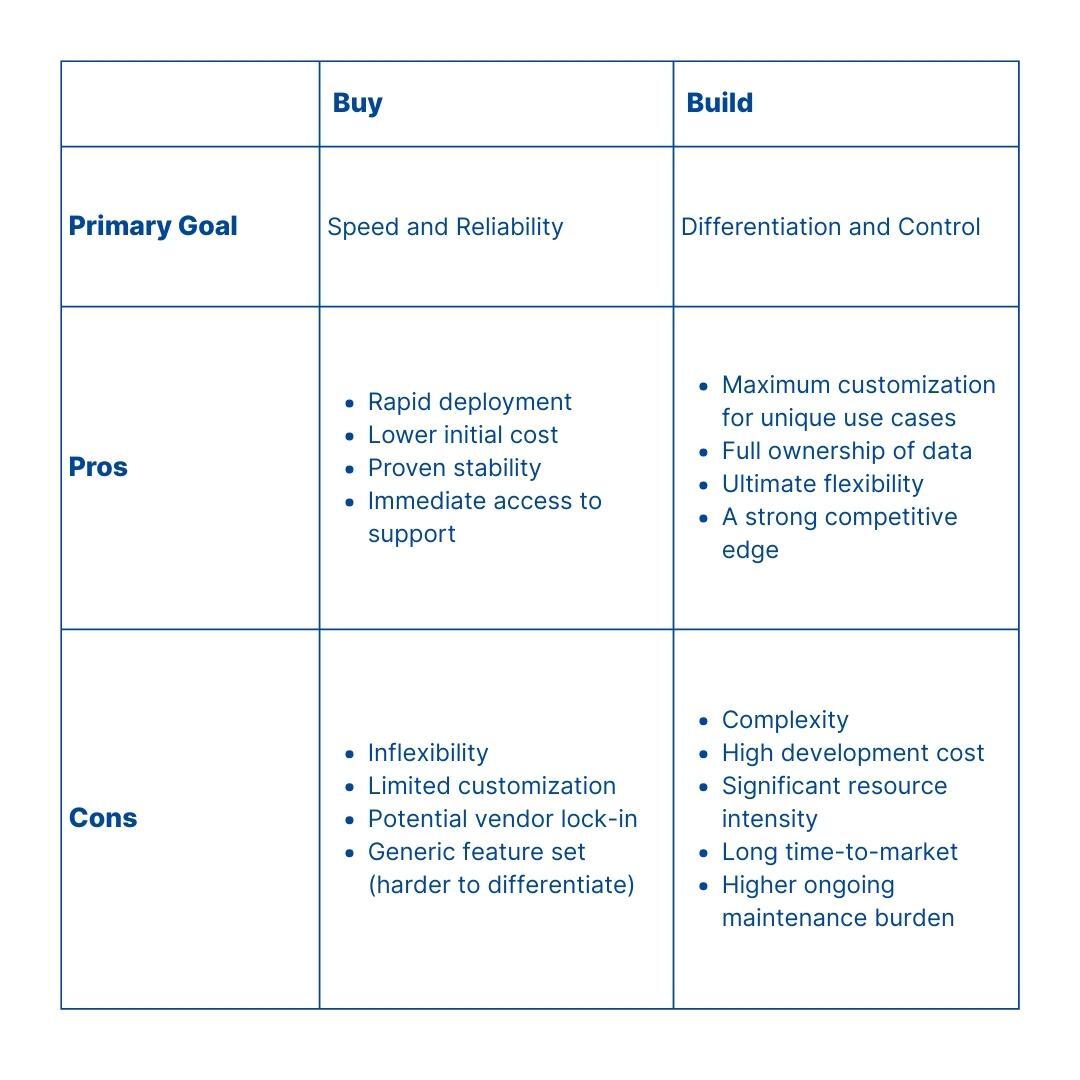
If you need to validate a standard business model fast and with fewer resources (e.g., scaling from 10 to 100), buying is often the safer, faster path. If your unique special use case is the fundamental reason you will succeed, resource-intensive building might be worth it.
The Hybrid Approach
For many operators, the dilemma between flexibility (building) and reliability (buying) is resolved through the hybrid approach. This strategy focuses development efforts on the parts of the stack that provide the most differentiation, while relying on established, proven infrastructure for the core, mission-critical functions. The typical hybrid split involves:
-
Buying the Core:
You license a reliable, tested API platform and use proven telematics hardware. This instantly solves the problem of security, stability, and vehicle integration, which is the most complex and resource-intensive part of the entire stack. -
Building the Differentiation:
Your in-house development team focuses exclusively on the user-level Mobile Application and the unique features of your Operator-Level Management Backend. This allows you to tailor the customer journey and specialized operational tasks, while bypassing the massive expense and risk of developing vehicle communication from scratch.
Key Takeaways
What is car sharing software?
Car sharing software describes a tech stack that consists of three layers: the vehicle-level system (telematics/keyless access), the user-level application (mobile app), and the operator-level management backend (admin dashboard). These layers must be integrated seamlessly to provide a reliable car sharing software
Which software component is the most critical for stability and scaling?
The vehicle-level communication layer (telematics) is the most critical. It handles the core, mission-critical functions like remote keyless access, vehicle control, and reliable data transmission (GPS, mileage, diagnostics).
Is building my own car sharing software a good idea?
The main risk is complexity and resource intensity. Developing the stable, secure, and robust vehicle communication layer from scratch requires significant upfront cost, time, and specialized technical expertise, leading to a long time-to-market.
Will buying white-label software limit my growth?
While fast and reliable, white-label solutions often feature a generic set of features that can limit your ability to tailor the service to a specialized use case or create a unique brand differentiator.
Can I combine building and buying strategies?
Yes, with a hybrid approach. It tackles the build vs. buy dilemma by combining their strengths. It involves buying the core, complex vehicle-level communication infrastructure (telematics + API) and building the user-level and differentiated operator-level components.