

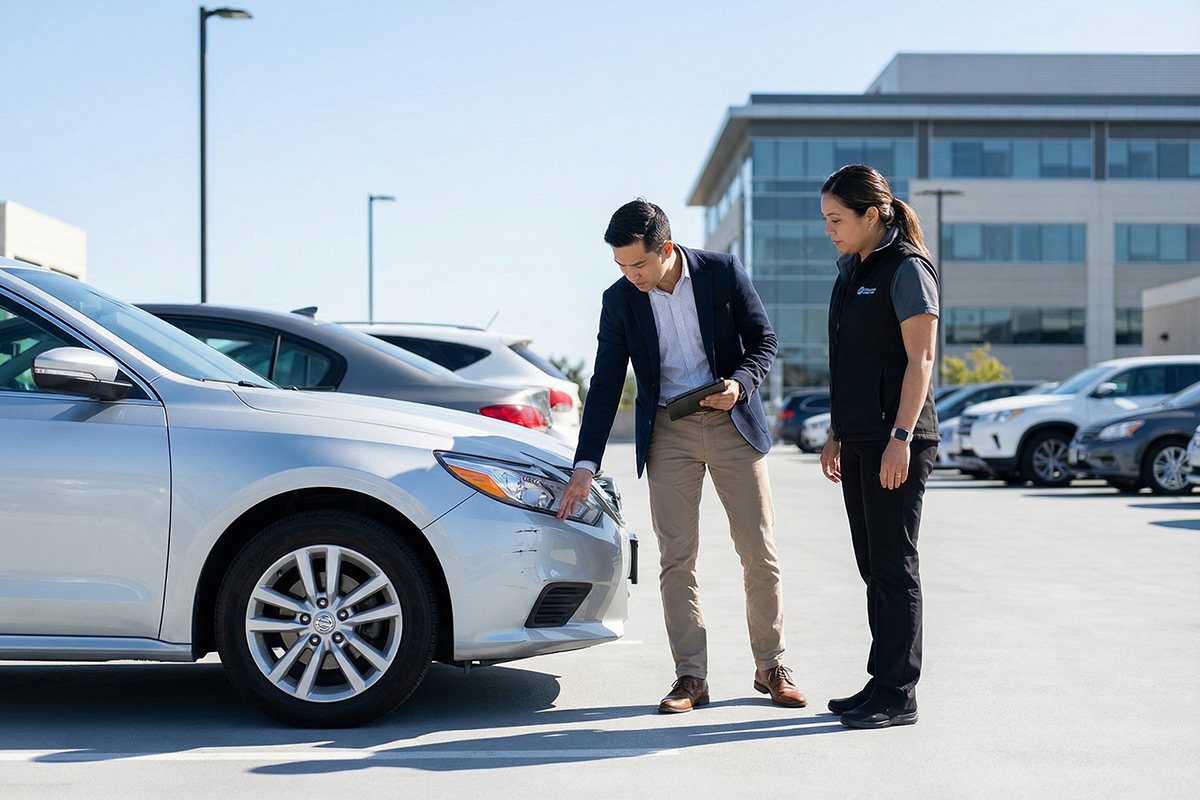
Car sharing insurance is a specialized commercial policy required for any vehicle rented to the public for short periods. Securing this coverage is often the most challenging step in launching a fleet, as standard personal auto policies strictly exclude commercial rental use. To succeed, you must shift your mindset from that of a vehicle owner to that of a professional rental company. While finding a provider is difficult, this barrier to entry effectively filters out casual competition.
In this lesson, you will learn the specific terminology needed to secure commercial coverage and why personal policies are insufficient. We will also cover the cost structure of fixed premiums, strategies to manage risk through deductibles, and the key requirements underwriters look for when vetting your fleet.
Defining Commercial Coverage
The most common mistake new operators make is assuming that a standard business use policy covers car sharing. It almost never does. Insurers classify short-term rental as one of the highest-risk categories in the automotive world because the vehicle is driven by strangers, often in unfamiliar areas. To secure the right policy, you must use the specific terminology for your region.
In the United Kingdom and Europe, the required product is typically called Self-Drive Hire insurance. In the United States, you may need Livery or Commercial Rental Fleet coverage. Asking a general insurance agent for car sharing insurance often leads to confusion or immediate rejection because they lack access to these niche products.
Consequently, you generally cannot purchase this coverage online. It requires a relationship with a specialized commercial broker who understands the rental market. These brokers have direct access to the specific underwriters who handle rental fleets. While this process takes more time than buying a personal policy, finding a knowledgeable broker is the only way to ensure your business is genuinely protected against liability.
The Cost Structure: Fixed vs. Utilization
Understanding the payment structure is critical for your financial planning. Unlike gig-economy platforms that deduct insurance costs on a per-trip basis, independent commercial fleet insurance typically operates on a fixed premium model. You pay a set amount per vehicle every month, regardless of whether the car is rented or sitting idle.
This creates a financial challenge known as the utilization trap. If a vehicle is not being driven, it is still costing you money every day. Profitability is only achieved when your rental frequency is high enough to offset this fixed cost. Consequently, high utilization is not just a revenue goal but a survival necessity to cover your insurance overhead.
While exact premiums vary significantly based on driver age limits, fleet location, and vehicle type, insurance will likely be your second-largest expense after the vehicle itself. When building your business plan, you must account for these substantial fixed costs from day one. Do not make the mistake of assuming your costs will automatically decrease if your business is slow.
Strategies for Managing Risk and Cost
One effective way to lower your fixed monthly premium is to adjust your deductible (often called an excess in Europe). This is the amount you must pay out-of-pocket before the insurance company covers a claim.
Insurers often offer lower monthly premiums if you agree to a higher deductible, such as €2,500 or more per incident. To manage this financial risk, operators typically pass this liability to the customer. If a user damages the car, they are responsible for paying this amount.
To offset this risk for the user, you can sell a damage waiver. This is an optional daily fee that the customer pays to reduce their liability to zero. Many experienced operators use these fees to create a cash reserve. Instead of filing an insurance claim for every minor scratch, which would raise future premiums, they use this reserve fund to pay for small repairs directly. This strategy protects your insurance record and improves cash flow. However, it is a cash-flow strategy that requires having sufficient savings to cover unexpected costs, not a guarantee of profit.
Common Challenges
Securing a policy is not automatic; insurers must first approve your business model. To be considered insurable, you must demonstrate that you are actively minimizing risk. Underwriters typically look for three specific operational safeguards before offering a quote.
First, they require telematics. Insurers view the telematics unit as a "black box" that provides essential transparency. It proves you can track your assets for theft recovery, a capability that is becoming increasingly critical, as Carlos Oliveira from Wift in Chile, notes:
"Chilean insurers are not yet equipped to integrate driving analysis systems into their pricing and policies for car subscription providers, but we’re paving the way for this next phase of innovation."

Carlos Oliveira
Co-founder and CTO | Wift
Source: INVERS Success Story with Wift
His company supports this claim with a 95% vehicle recovery rate, demonstrating exactly how telematics data can reduce risk. Being able to detect and ban reckless drivers is another key signal to insurers that you are protecting their interests.
Second, you must implement strict user vetting. While marketing brings customers to your door, vetting ensures you keep your insurance policy. This includes digital identity checks, facial verification (selfies), and automated license validation. Most insurers also enforce strict age limits, often requiring drivers to be 21 or even 25 years old to qualify for coverage.
Finally, vehicle security influences your eligibility and price. Insurers will ask where the fleet is parked when not in use. Vehicles stored in gated garages or secure lots are significantly cheaper to insure and easier to cover than those parked on public streets.
The Future: Scaling and Fleet Policies
As your business grows, your relationship with insurance providers will fundamentally change. Small fleets (typically 1–10 vehicles) are the hardest to insure. Because you have no operational history, underwriters charge standard "newbie rates" based on general market risk. You simply pay a fixed price per vehicle with little room for negotiation.
However, once you scale to a larger fleet (often 50+ vehicles), the conversation shifts. You can move from individual vehicle policies to a comprehensive Fleet Policy. At this stage, insurers look at your specific Loss Ratio, which is the amount of money they have paid out in claims versus the amount you have paid in premiums.
This makes your first year of operation critical. If you survive the early stages with few accidents and a low loss ratio, you prove that your vetting and security measures work. This evidence gives you significant bargaining power to negotiate lower premiums in the future. Therefore, strict risk management in the beginning is a long-term financial investment.
Key Takeaways
Why can't I use my personal car insurance for car sharing?
Personal policies specifically exclude commercial rental activity. You require specialized commercial coverage (e.g., Self-Drive Hire or Livery) to be protected against liability.
Why do I pay even when the car isn't moving?
Independent operators typically pay fixed monthly premiums regardless of vehicle use. If your cars sit idle, you still pay, making high utilization essential for covering costs.
Can I lower my premium for car sharing insurance by paying more upfront?
Accepting a higher deductible (e.g., €2,500) lowers your monthly premium. You can manage this risk by passing the liability to the customer or selling damage waivers.
What operational tools do insurers require for car sharing?
Insurers generally demand telematics for vehicle tracking and behavior monitoring, along with strict digital user vetting (KYC) to minimize theft and accident risks.
Do premiums drop as I grow my car sharing fleet?
Small fleets pay standard rates due to a lack of history. Larger fleets (50+) can negotiate custom Fleet Policies based on their specific Loss Ratio and proven safety record.